This year has been a period of remarkable progress for the Center, marked by a steadfast commitment to leveraging the power of technology and innovation to revolutionize healthcare delivery and medical education.
Our core focus remains on harnessing the transformative potential of digital health solutions by fostering a dynamic environment where engineers, researchers, medical professionals, and designers collaborate seamlessly. This multi-disciplinary approach fuels groundbreaking advancements in areas like Artificial Intelligence (AI) and 3D printing, technologies poised to significantly impact the future of medicine, specifically in low-resource settings.
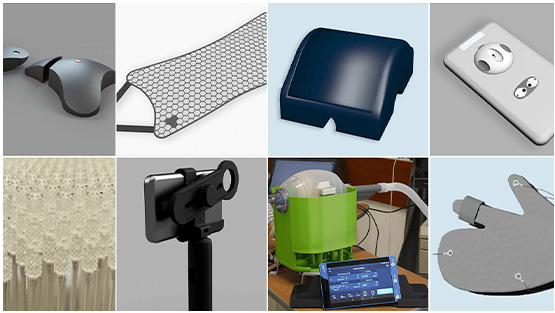
3D printing holds immense promise for precision medicine. By creating customized medical implants and prosthetics, we can significantly improve patient outcomes and quality of life. This year, the Center has made significant strides in 3D printing research, developing innovative applications for various medical specialties, including neurosurgery, orthopedics and dentistry, among others. The Lab has also helped develop low-cost educational training models, helping bridge the gap between theory and practical application.
I am fascinated by the transformative potential of AI in healthcare for low- and middle-income countries (LMICs). AI promises to enhance diagnostic accuracy, optimize treatments, and streamline processes, especially in resource-constrained settings. I envision through AI-driven telemedicine, remote areas can access specialized care, and predictive analytics can enable proactive interventions. Embracing AI will allow us to leapfrog traditional models, creating more equitable and resilient healthcare systems tailored to our diverse populations.
Looking ahead, we are committed to further expanding our 3D printing capabilities and exploring its potential across a wider spectrum of healthcare applications. We are also dedicated to fostering collaborations with local and international partners to accelerate the integration of innovative solutions, AI and 3D printing into mainstream medical practice and education.
The Center is unwavering in its mission to push the boundaries of healthcare through technological innovation. Looking ahead to 2024, a compelling vision emerges: a pathway driven by research, innovation, and collaborative efforts to improve the quality of life in underserved areas.
Dr Saleem Sayani
Director, Aga Khan Development Network Digital Health Resource Center
Director, Technology Innovation Support Center
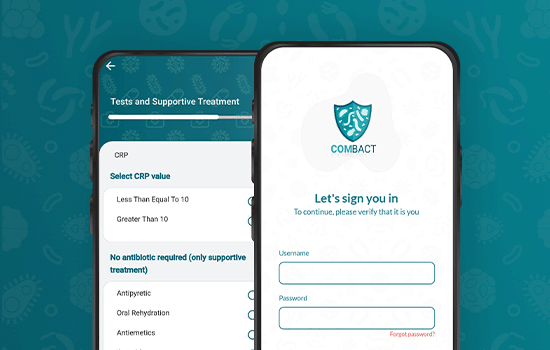
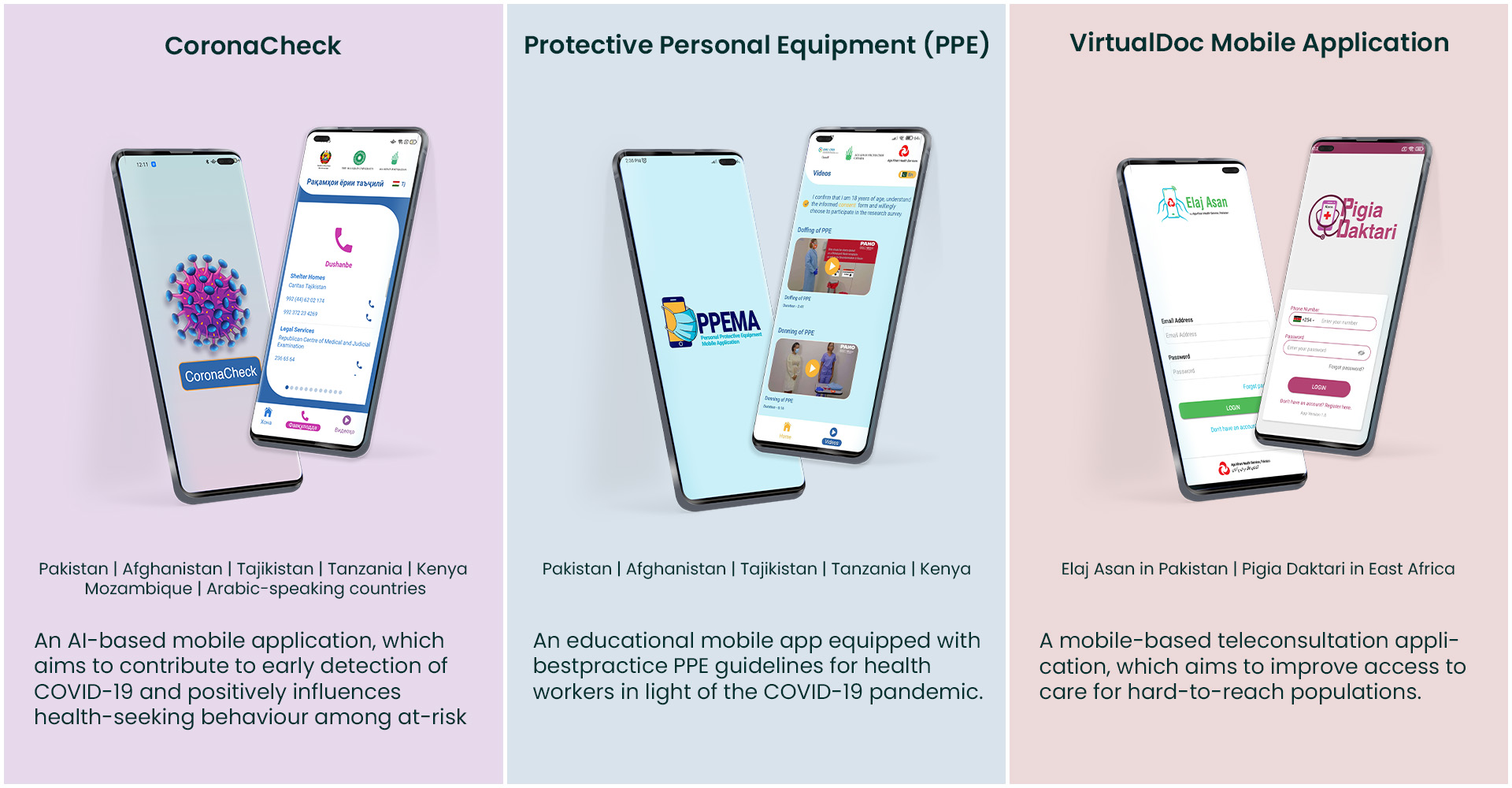
The COVID-19 Innovation Research Project (CIRP) investigated the potential of digital health solutions to improve healthcare access and strengthen health systems in at-risk populations across six countries: Afghanistan, Pakistan, Tajikistan, Kenya, Tanzania, and Arabic-speaking regions.
Learn More
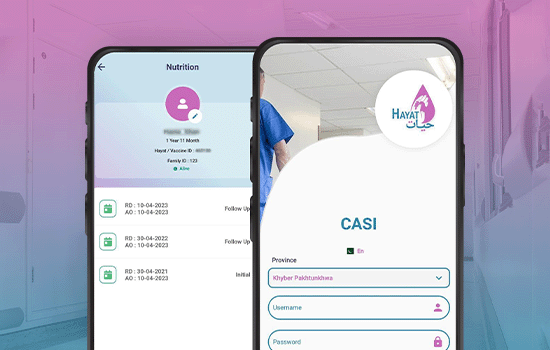
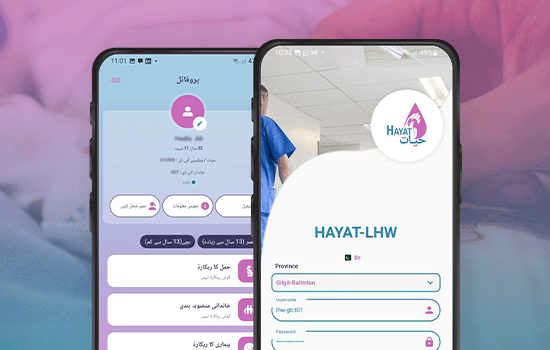
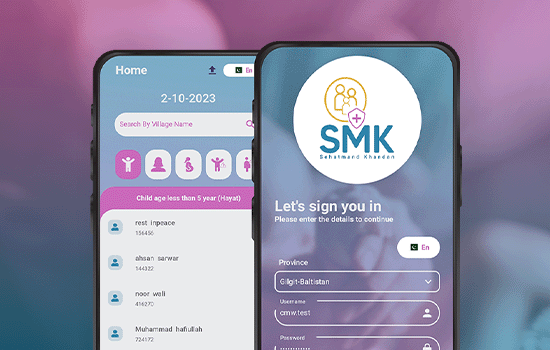
Hayat is a novel mHealth application, which aims to empower health workers with technologies to improve coverage of and access to Reproductive, Maternal, Newborn and Child Health (RMNCH), immunization and child growth services. Hayat achieves this by streamlining healthcare worker operations through digitalization. The program prioritizes the well-being of children under two years old and women of reproductive age residing in targeted catchment areas
Learn More
In March 2023, 32-year-old Ahmed Hamid from Somara, Bamyan, Afghanistan...
In May 2023, Faraz Sharif, a dedicated employee at Pamir Energy Company in Gorno-Badakhshan...
Anoosheh Mehrdad, a 39-year-old resident of Khorog, Tajikistan, faced a daunting medical challenge...
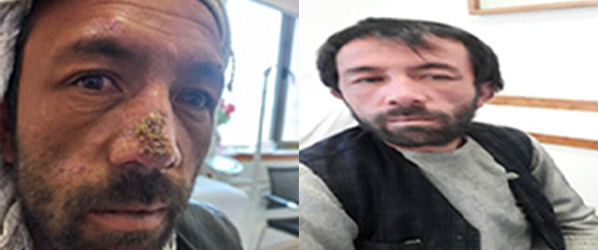
In March 2023, 32-year-old Ahmed Hamid from Somara, Bamyan, Afghanistan faced a troubling rash on his nose. With limited resources at his local health center, Ahmed sought out specialized care. Thanks to the assistance of Dr. Mohammad Ali at Topchi Secondary Health Center, Ahmed was quickly linked with Dr. Hayatullah Shalizie, a Dermatologist at the French Medical Institute for Mothers and Children (FMIC) in Kabul through the AKDN Digital Health Program.
During the teleconsultation session, Dr. Shalizie promptly diagnosed Ahmed with Contact Dermatitis and provided a suitable treatment plan. A follow-up teleconsultation was arranged, and, to Ahmed's relief, the rash had disappeared. Without access to teleconsultation services, Ahmed would have faced the burden of a full-day journey and accommodation costs to Kabul, rather than the convenient 30-minute drive to the nearest next-level facility, Bamyan Provincial Hospital. This success story showcases the power of telemedicine in improving access to quality healthcare for individuals like Ahmed.
This story highlights telemedicine's transformative power, making specialized healthcare accessible, affordable, and efficient.
In May 2023, Faraz Sharif, a dedicated employee at Pamir Energy Company in Gorno-Badakhshan Autonomous Oblast (GBAO), Tajikistan, suffered an unfortunate fall while on the job. Faraz fell from an electricity pole while fixing cables, sustaining a severe head injury. His family feared memory loss and potential long-term health issues from the trauma.
Faraz was initially admitted at the Khorog Oblast General Hospital with intracranial hematoma. Due to the lack of a qualified neurosurgeon at the Hospital, Faraz’s family insisted on sending him to the National Medical Center in Dushanbe for an operation, however, he was not in a transportable condition for the 13-hour, 600 km journey. Time was working against Faraz, and he required urgent medical attention.
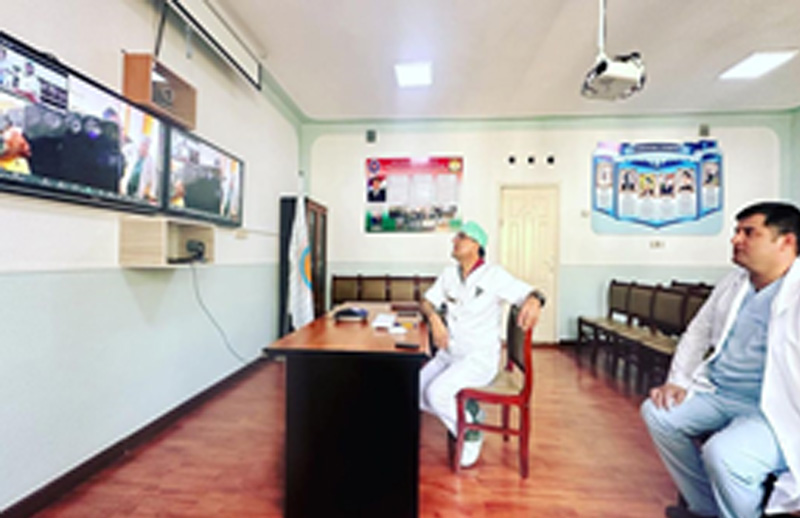
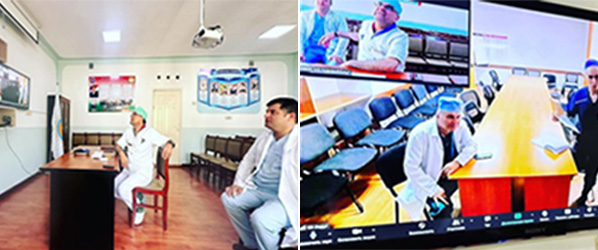
The situation took a hopeful turn thanks to the AKDN Digital Health Program. Through telemedicine services provided by the program, a teleconsultation was quickly arranged between Khorog Oblast General Hospital and the National Medical Center in Dushanbe. During the consultation, Dr. Ahsan Ali Shah, a skilled neurosurgeon at the National Medical Center, recommended a CT scan to assess the size of the hematoma. Considering the challenging routes between Khorog and Dushanbe, obtaining the CT scan locally would have caused a considerable delay. The Digital Health Program’s teleradiology service, allowed for the CT scans to be transmitted to Dushanbe, where they were promptly reviewed. Fortunately, the report revealed that Faraz did not require surgery. Dr Ahsan then prescribed the necessary medications to aid in his recovery.
Thanks to the timely intervention made possible by telemedicine, Faraz was able to heal without the need for surgical intervention. Faraz received timely access to qualified physicians while high-quality CT images are shared instantaneously, saving him the hassle of sending the images to Dushanbe with them to Dushanbe for a report and to bring back the result, which took approximately 3-4 days. This not only saved him from the potential risks associated with surgery but also saved valuable time and resources. Most importantly, it saved his life.
Separate vertical programs and related disconnects result in inefficient functioning of health systems of low- and middle-income countries. Furthermore, weaknesses in primary health care including inadequate staff force, challenges in implementation of monitoring and governance frameworks, inefficient paper-based systems leading to transparency challenges, and underperformance of primary health care providers within the community further compound the situation, resulting in poor health outcomes. Pakistan is one of the two countries in the world where polio remains endemic, and there is a need for provincial health systems to implement innovative, effective, and efficient solutions for Pakistan to achieve the Sustainable Development Goal targets of Maternal Mortality Ratio of 70 and the under-five mortality of 25 by 2030.
Hayat is a novel mHealth application, which aims to empower health workers with technologies to improve coverage of and access to Reproductive, Maternal, Newborn and Child Health (RMNCH), immunization and child growth services. Hayat achieves this by streamlining healthcare worker operations through digitalization. The program prioritizes the well-being of children under two years old and women of reproductive age residing in targeted catchment areas within Gilgit-Baltistan (GB) and Chitral, Khyber Pakhtunkhwa (KPK).
Pilot and scale-up evaluations demonstrated significant improvements in health worker attendance, service satisfaction, and key maternal and child health outcomes including improved vaccination rates and skilled birth attendance.
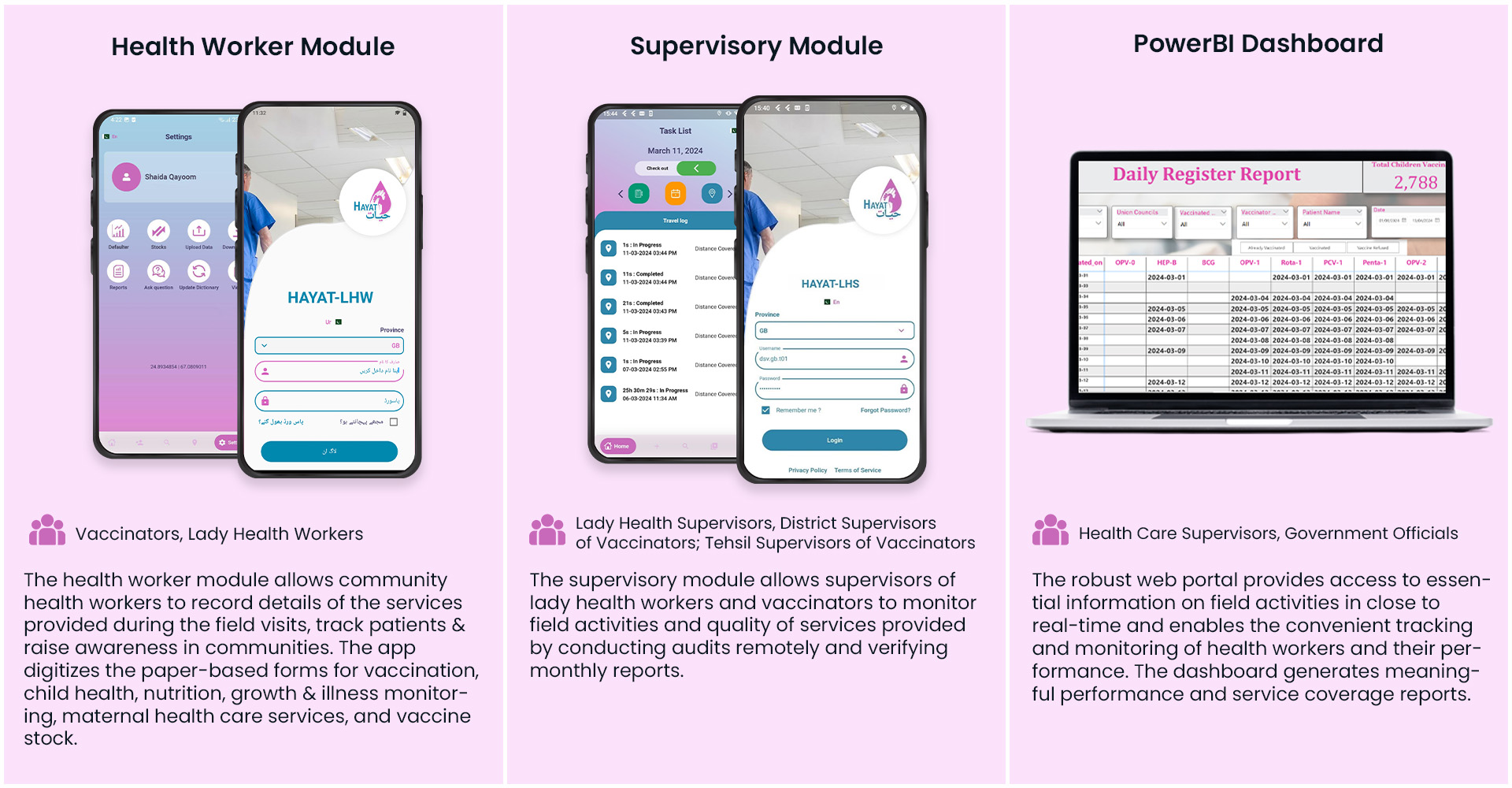
Hayat is currently undergoing its final transition-to-scale phase (TTS4). This evidence-based intervention has been rigorously evaluated throughout its implementation. TTS4 included cross-sectional surveys with key stakeholders across the Pakistani health system, encompassing decision-makers, provincial and district leadership, and both administrative and field personnel. The surveys assessed the potential for integration and long-term sustainability of Hayat. This evaluation focused on three core categories: core system readiness, technological infrastructure readiness, and societal acceptance.
The findings reveal a strong understanding among health professionals of Hayat's potential to address critical needs. Additionally, there is a demonstrable commitment from the government to expand digital technology infrastructure in previously underserved regions. However, policymakers and politicians exhibit a gap in awareness regarding digital health solutions like Hayat. Pakistan's political landscape presents challenges, as past policies promoting technology adoption have seen limited execution. Additionally, while telemedicine is gaining popularity in support of its dissemination, there are still limited published standards for mHealth tools like Hayat.
Qualitative research conducted in 2020 (Zaidi et al., 2020) assessed the intervention's usability, operability, and task-technology fit to inform its long-term sustainability within the health system. Findings indicated positive user acceptance among Pakistani healthcare providers, who appreciated the convenience of using the Hayat app on their smartphones. The app demonstrably contributed to a more reliable and transparent health system by facilitating improved data tracking for frontline workers and clients. Notably, the research revealed user-friendliness for both end-users and stakeholders at the district level. Platform adoption has yielded demonstrably improved data quality and timeliness, leading to enhanced immunization coverage and maternal care through more effective supervision and monitoring of community health workers and lady health workers. The enhanced validity and reliability of data collected through the app has instilled greater confidence in health managers' decision-making processes.
The Hayat platform has received strong support and demand from the health systems in GB and KPK, despite administrative and political challenges. The project has established partnerships at multiple tiers of the health system, and the platform has been upgraded for expansion into remote regions.
Due to the project’s successful implementation, encouraging results in improving health outcomes, and positive uptake by multiple tiers of the health system, the project currently being scaled in additional districts of Gilgit-Baltistan, including Astore, Diamer, Hunza, Skardu and Nagar. Similarly. the Department of Health, KPK is now considering Hayat for implementation across the province of KPK.
Hayat has been implemented by the Aga Khan University in collaboration with Aga Khan Health Service, Pakistan and local government partners. It is funded by the Government of Canada, through the Grand Challenges Canada and the Aga Khan Foundation Canada.
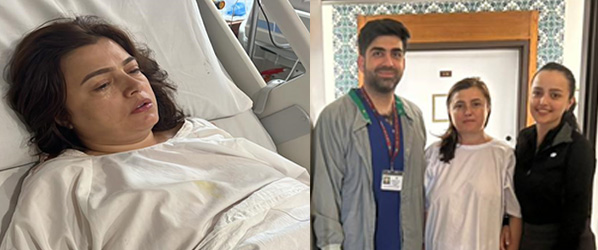
Anoosheh Mehrdad, a 39-year-old resident of Khorog, Tajikistan, faced a daunting medical challenge when diagnosed with a brain tumor at Aga Khan Medical Centre, Khorog (AKMC, K). Over a few months, due to the tumor, Anoosheh's peripheral vision rapidly deteriorated, causing significant distress. A teleconsultation session arranged under the AKDN Digital Health Program among physicians in Khorog, Dushanbe, and Aga Khan University Hospital, Pakistan (AKUH, P) marked a turning point in her journey towards recovery. After a few consultations, Dr. Ahsan Ali Khan, a neurologist at AKU, made a critical decision: he requested Anoosheh to visit AKU, Pakistan for immediate surgery, which was necessary to remove the tumor and prevent looming blindness.
Time was of the essence. In July, AKMC, K swiftly processed the necessary paperwork and visas to expedite Anoosheh's journey to Pakistan for treatment. Upon her arrival to AKUH, P, Anoosheh underwent a delicate eight-hour surgery with remarkably positive outcomes. To her sister's astonishment, who had been a constant source of support, Anoosheh made an immediate recovery and was discharged within three days.
Anoosheh's remarkable story exemplifies the transformative power of timely medical intervention. It underscores our commitment to ensuring that patients like Anoosheh receive the care they urgently need, paving the way for positive outcomes and a brighter future.
The COVID-19 Innovation Research Project (CIRP) investigated the potential of digital health solutions to improve healthcare access and strengthen health systems in at-risk populations across six countries: Afghanistan, Pakistan, Tajikistan, Kenya, Tanzania, and Arabic-speaking regions.
The study explored the effectiveness, feasibility, usability, and sustainability of integrating these innovations into local healthcare systems through public-private partnerships (PPPs) with national and regional health authorities.
During 2023, the project was concluded. The feasibility and user-acceptance of the three initiative was evaluated through three research studies evaluating PPEMA, VirtualDoc and CoronaCheck. The results were statistically significant, demonstrating high user satisfaction, improved knowledge about COVID-19, and self-reported changes in behavior across all target countries.
Benefits for Underserved Population: The project findings were particularly promising for populations in rural areas and informal settlements, suggesting potential to reduce healthcare disparities. This highlights the potential of mobile health (mHealth) solutions to expand access to care, particularly in the context of the growing trend towards remote healthcare delivery.
mHealth: A Viable Capacity-Building Tool: CIRP's findings also suggest that mHealth can be a valuable tool for capacity building, especially in remote areas of low- and middle-income countries (LMICs) with limited training opportunities. Context-specific mobile apps with local language content based on scientific evidence can effectively combat misinformation and promote healthy behaviors within LMIC populations.